Posts Tagged ‘ highly probable vs highly probed ’

G.A. Barnard: The “catch-all” factor: probability vs likelihood

September 25, 2017
By
G.A. Barnard: The “catch-all” factor: probability vs likelihood

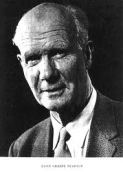
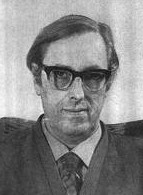
  With continued acknowledgement of Barnard’s birthday on Friday, Sept.23, I reblog an exchange on catchall probabilities from the “The Savage Forum” (pp 79-84 Savage, 1962) with some new remarks.[i]   BARNARD:…Professor Savage, as I understand him, said earlier that a difference between likelihoods and probabilities was that probabilities would normalize because they integrate to one, whereas likelihoods […]
Read more »

Performance or Probativeness? E.S. Pearson’s Statistical Philosophy

August 16, 2017
By
Performance or Probativeness?  E.S. Pearson’s Statistical Philosophy

This is a belated birthday post for E.S. Pearson (11 August 1895-12 June, 1980). It’s basically a post from 2012 which concerns an issue of interpretation (long-run performance vs probativeness) that’s badly confused these days. I’ll blog some E. Pearson items this week, including, my latest reflection on a historical anecdote regarding Egon and the woman he wanted […]

Read more »

G.A. Barnard: The “catch-all” factor: probability vs likelihood

September 26, 2015
By
G.A. Barnard: The “catch-all” factor: probability vs likelihood

 From the “The Savage Forum” (pp 79-84 Savage, 1962)[i]   BARNARD:…Professor Savage, as I understand him, said earlier that a difference between likelihoods and probabilities was that probabilities would normalize because they integrate to one, whereas likelihoods will not. Now probabilities integrate to one only if all possibilities are taken into account. This requires in its application to […]

Read more »

Erich Lehmann: Statistician and Poet

November 21, 2014
By
Erich Lehmann: Statistician and Poet

Memory Lane 1 Year (with update): Today is Erich Lehmann’s birthday. The last time I saw him was at the Second Lehmann conference in 2004, at which I organized a session on philosophical foundations of statistics (including David Freedman and D.R. Cox). I got to know Lehmann, Neyman’s first student, in 1997.  One day, I […]

Read more »

Why the Law of Likelihood is bankrupt–as an account of evidence

November 15, 2014
By
Why the Law of Likelihood is bankrupt–as an account of evidence

There was a session at the Philosophy of Science Association meeting last week where two of the speakers, Greg Gandenberger and Jiji Zhang had insightful things to say about the “Law of Likelihood” (LL)[i]. Recall from recent posts here and here that the (LL) regards data x as evidence supporting H1 over H0   iff Pr(x; H1) > Pr(x; H0). On many accounts, […]

Read more »

“Statistical Flukes, the Higgs Discovery, and 5 Sigma” at the PSA

November 9, 2014
By
“Statistical Flukes, the Higgs Discovery, and 5 Sigma” at the PSA

We had an excellent discussion at our symposium yesterday: “How Many Sigmas to Discovery? Philosophy and Statistics in the Higgs Experiments” with Robert Cousins, Allan Franklin and Kent Staley. Slides from my presentation, “Statistical Flukes, the Higgs Discovery, and 5 Sigma” are posted below (we each only had 20 minutes, so this is clipped,but much came out in the discussion). […]

Read more »

G.A. Barnard: The Bayesian “catch-all” factor: probability vs likelihood

September 23, 2014
By
G.A. Barnard: The Bayesian “catch-all” factor: probability vs likelihood

Today is George Barnard’s birthday. In honor of this, I have typed in an exchange between Barnard, Savage (and others) on an important issue that we’d never gotten around to discussing explicitly (on likelihood vs probability). Please share your thoughts. The exchange is from pp 79-84 (of what I call) “The Savage Forum” (Savage, 1962)[i]  ♠♠♠♠♠♠♠♠♠♠♠♠♠♠♠♠♠♠♠♠♠♠♠♠♠♠♠♠♠♠♠♠♠♠♠♠♠♠♠♠ BARNARD:…Professor Savage, as […]

Read more »

BREAKING THE LAW! (of likelihood): to keep their fit measures in line (A), (B 2nd)

August 29, 2014
By
BREAKING THE LAW! (of likelihood): to keep their fit measures in line (A), (B 2nd)

1.An Assumed Law of Statistical Evidence (law of likelihood) Nearly all critical discussions of frequentist error statistical inference (significance tests, confidence intervals, p- values, power, etc.) start with the following general assumption about the nature of inductive evidence or support: Data x are better evidence for hypothesis H1 than for H0 if x are more probable under H1 than […]

Read more »

Continued:”P-values overstate the evidence against the null”: legit or fallacious?

July 23, 2014
By
Continued:”P-values overstate the evidence against the null”: legit or fallacious?

Since the comments to my previous post are getting too long, I’m reblogging it here to make more room. I say that the issue raised by J. Berger and Sellke (1987) and Casella and R. Berger (1987) concerns evaluating the evidence in relation to a given hypothesis (using error probabilities). Given the information that this hypothesis H* was randomly selected […]

Read more »

“P-values overstate the evidence against the null”: legit or fallacious? (revised)

July 14, 2014
By
“P-values overstate the evidence against the null”: legit or fallacious? (revised)

0. July 20, 2014: Some of the comments to this post reveal that using the word “fallacy” in my original title might have encouraged running together the current issue with the fallacy of transposing the conditional. Please see a newly added Section 7. 1. What you should ask… Discussions of P-values in the Higgs discovery invariably recapitulate many […]

Read more »


Subscribe

Email:

  Subscribe