Posts Tagged ‘ E S Pearson ’

Egon Pearson’s Heresy

August 25, 2017
By
Egon Pearson’s Heresy

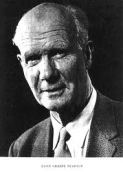
Here’s one last entry in honor of Egon Pearson’s birthday: “Statistical Concepts in Their Relation to Reality” (Pearson 1955). I’ve posted it several times over the years (6!), but always find a new gem or two, despite its being so short. E. Pearson rejected some of the familiar tenets that have come to be associated with […]
Read more »

Performance or Probativeness? E.S. Pearson’s Statistical Philosophy

August 16, 2017
By
Performance or Probativeness?  E.S. Pearson’s Statistical Philosophy

This is a belated birthday post for E.S. Pearson (11 August 1895-12 June, 1980). It’s basically a post from 2012 which concerns an issue of interpretation (long-run performance vs probativeness) that’s badly confused these days. I’ll blog some E. Pearson items this week, including, my latest reflection on a historical anecdote regarding Egon and the woman he wanted […]

Read more »

Jerzy Neyman and “Les Miserables Citations” (statistical theater in honor of his birthday)

April 18, 2017
By
Jerzy Neyman and “Les Miserables Citations” (statistical theater in honor of his birthday)

For my final Jerzy Neyman item, here’s the post I wrote for his birthday last year:  A local acting group is putting on a short theater production based on a screenplay I wrote:  “Les Miserables Citations” (“Those Miserable Quotes”) [1]. The “miserable” citations are those everyone loves to cite, from their early joint 1933 paper: We are inclined to think that as […]

Read more »

Guest Blog: ARIS SPANOS: The Enduring Legacy of R. A. Fisher

February 19, 2017
By
Guest Blog: ARIS SPANOS: The Enduring Legacy of R. A. Fisher

By Aris Spanos One of R. A. Fisher’s (17 February 1890 — 29 July 1962) most re­markable, but least recognized, achievement was to initiate the recast­ing of statistical induction. Fisher (1922) pioneered modern frequentist statistics as a model-based approach to statistical induction anchored on the notion of a statistical model, formalized by: Mθ(x)={f(x;θ); θ∈Θ}; x∈Rn […]

Read more »

“Statistical Concepts in Their Relation to Reality” by E.S. Pearson

April 24, 2015
By
“Statistical Concepts in Their Relation to Reality” by E.S. Pearson

To complete the last post, here’s Pearson’s portion of the “triad”  “Statistical Concepts in Their Relation to Reality” by E.S. PEARSON (1955) SUMMARY: This paper contains a reply to some criticisms made by Sir Ronald Fisher in his recent article on “Scientific Methods and Scientific Induction”. Controversies in the field of mathematical statistics seem largely […]

Read more »

Aris Spanos: The Enduring Legacy of R. A. Fisher

February 19, 2014
By
Aris Spanos: The Enduring Legacy of R. A. Fisher

More Fisher insights from A. Spanos, this from 2 years ago: One of R. A. Fisher’s (17 February 1890 — 29 July 1962) most re­markable, but least recognized, achievement was to initiate the recast­ing of statistical induction. Fisher (1922) pioneered modern frequentist statistics as a model-based approach to statistical induction anchored on the notion of a […]

Read more »

Blogging E.S. Pearson’s Statistical Philosophy

August 13, 2013
By
Blogging E.S. Pearson’s Statistical Philosophy

For a bit more on the statistical philosophy of Egon Sharpe (E.S.) Pearson (11 Aug, 1895-12 June, 1980), I reblog a post from last year. It gets to the question I now call: performance or probativeness? Are frequentist methods mainly useful to supply procedures which will not err too frequently in some long run? (performance) […]

Read more »

E.S. Pearson’s Statistical Philosophy

August 16, 2012
By
E.S. Pearson’s Statistical Philosophy

Egon Sharpe (E.S.) Pearson’s birthday was August 11.  This slightly belated birthday discussion is directly connected to the question of the uses to which frequentist methods may be put in inquiry.  Are they limited to supplying procedures which will not err too frequently in some vast long run? Or are these long run results of [...]

Read more »

E.S. Pearson Birthday

August 11, 2012
By
E.S. Pearson Birthday

Today is Egon Pearson’s birthday, but I will postpone some discussion of his work for a few days. He is, as Erich Lehmann noted in his review of EGEK (1996)[i]*, “the hero of Mayo’s story” because one may find throughout his work, if only in side discussions, hints, and examples, the key elements for an [...]

Read more »


Subscribe

Email:

  Subscribe